
The Pattern Stash Challenge: Intro and Guidelines
I’ve been pretty good in my 25 + years as a knitter and sewist (and now crocheter) about not letting my yarn or fabric stash get out of control. Most of the time I don’t buy yarn or fabric unless I have a pattern in mind for them already – I don’t always make *that* pattern with them, but avoiding too many impulse buys has helped my stash remain at a level that works for me.*
*Friendly reminder that there’s no “right” size of a yarn (or fabric) stash – stash size only becomes a problem if you constantly feel overwhelmed and stressed out by it, whether that’s at a dozen skeins of yarn, at 200 skeins, or more.
Where I have a problem is my pattern stash. You see, not only am I the type of person who sees a cute pattern online (or being made by a friend) and goes to grab it almost immediately, I also love pattern books and had a subscription to Vogue Knitting from 2005 to 2015. I own so many patterns that I can’t actually remember what I have any more – especially since much of it is on paper and not stored in Ravelry or the pattern PDF folder on my computer. I also find I can only really keep 3 to 4 projects in my actual “to make next” queue at any one time or I just forget about them completely, and that includes ALL my craft projects: knitting, crochet, sewing, embroidery and miscellaneous.
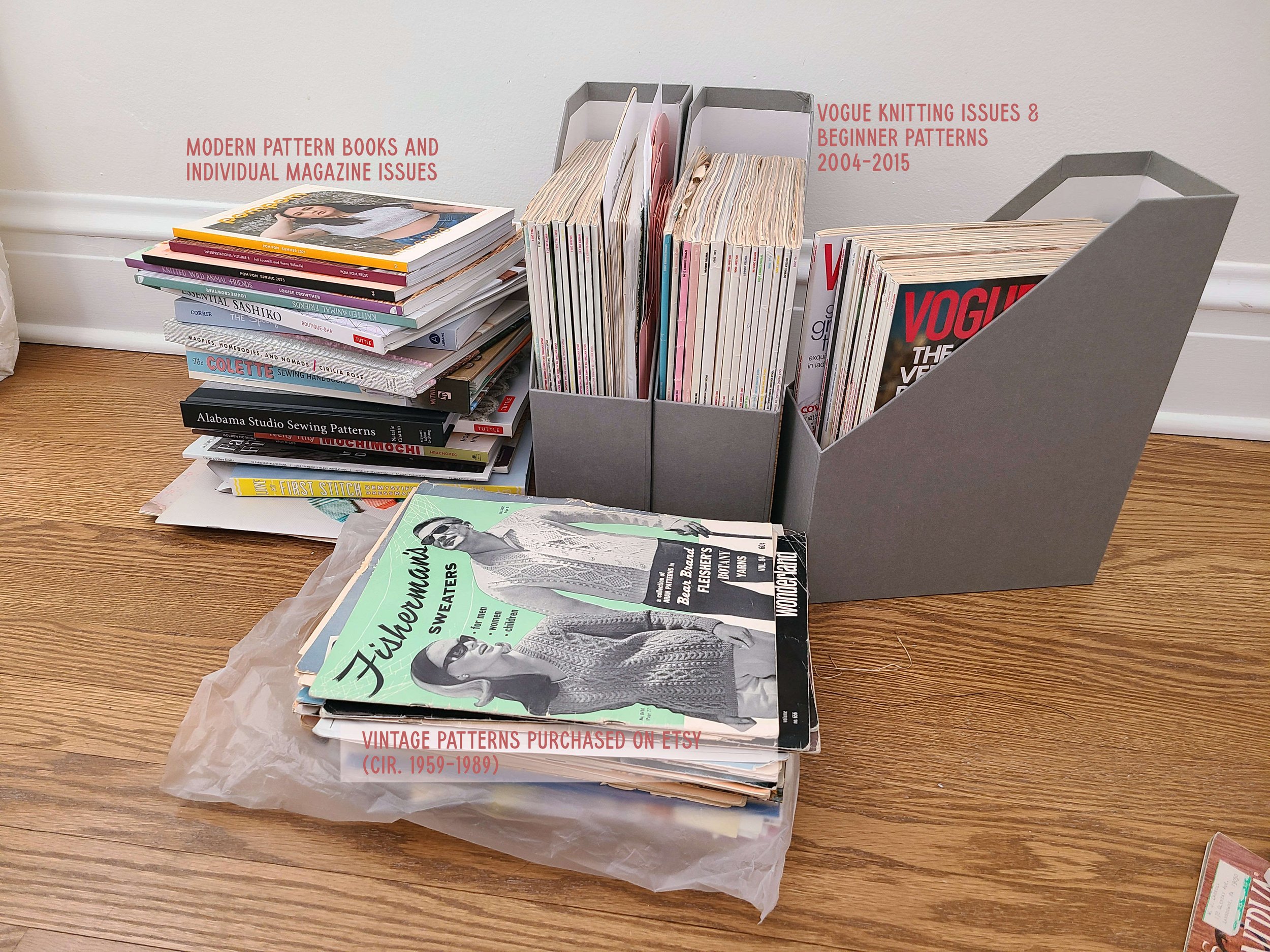
My pattern stash has three distinct parts (and this doesn’t include the binder of paper sewing pattern envelopes I also have, because it’s currently buried in my closet).
As you may have noticed if you read my 2026 craft goals post, I set a goal for myself of knitting at least 60% new WIPs from a pattern I already own, and after looking at my pattern library, I’m going to expand that to sewing as well.
So to keep myself on track, these are my self-imposed rules for my pattern stash challenge:
Knit at least 60% new WIPs from a pattern I already own as of Jan 1.
Sew at least two projects from patterns I already own before I purchase any new patterns. I sew a LOT less in a year than I knit and I make a much lower percentage of the sewing patterns I buy, so I made some modifications to account for the smaller sample size.
Crochet projects are exempt from this challenge for 2026 because as a newer crocheter, I don’t own many crochet patterns yet.
Patterns that are free (such as Knitty patterns) or that are given to me for free this calendar year (for example in a designer giveaway or as a present) do not count one way or the other. I’m using the walk rule from baseball, where a walk doesn’t count for or against your batting average; I will track the number of free patterns I start this year but, like walks, I’ll put them out to the side when calculating whether I’m hitting the 60%.
Patterns that I buy this calendar year but do not actually start making before Dec 31 do not count against me. I want to be able to buy patterns I like and support independent designers and small publishers particularly. I’m not doing this challenge to cut down on spending, I’m doing this because I want to refamiliarize myself with the patterns I own.
I intend to start logging my pattern stash in an Airtable database – I’m using this one from Jane of All Fibres that’s available for free, with some modifications for pattern pattern tracking (I may discuss Airtable in a future post if there’s interest, but Jane’s blog is a great overview). If I make a pattern out of stash, I must log it in the database; if it’s in a book or magazine issue, the entire book or issue must be logged. I am hoping to add at least 100 of my written patterns to the Airtable database, but I may adjust this goal as I see how long each one of these patterns takes to add.
Size Inclusiveness Guideline: A large number of my paper knitting patterns are more than 20 years old and were published with pretty small size ranges. If I do choose to knit one of these, I will be upfront about the size range; I will also do a little research to see if an updated, more size inclusive version was ever published and link to that if it’s available. If there isn’t a direct update available but I can find a size inclusive pattern with similar characteristics I will link to that instead. I don’t know how often it will come up but I wanted to make it clear up front how I was going to handle the size restrictions that come with older knitting patterns.
My sewing pattern collection is much younger and tends to run in larger size ranges but I will always state clearly what the size range for any given pattern is in any accounting I do for this project.
I’m a slow maker, so my plan is to do roughly quarterly check ins to keep track of my progress. I may also pop in a few extra posts here and there if I notice an interesting trend or side effect of doing this challenge, to explain how the Airtable database is going, etc.
If you’d like to try this yourself, I’d love it if you’d post a comment here and on any subsequent posts in the series, so we can all support each other!
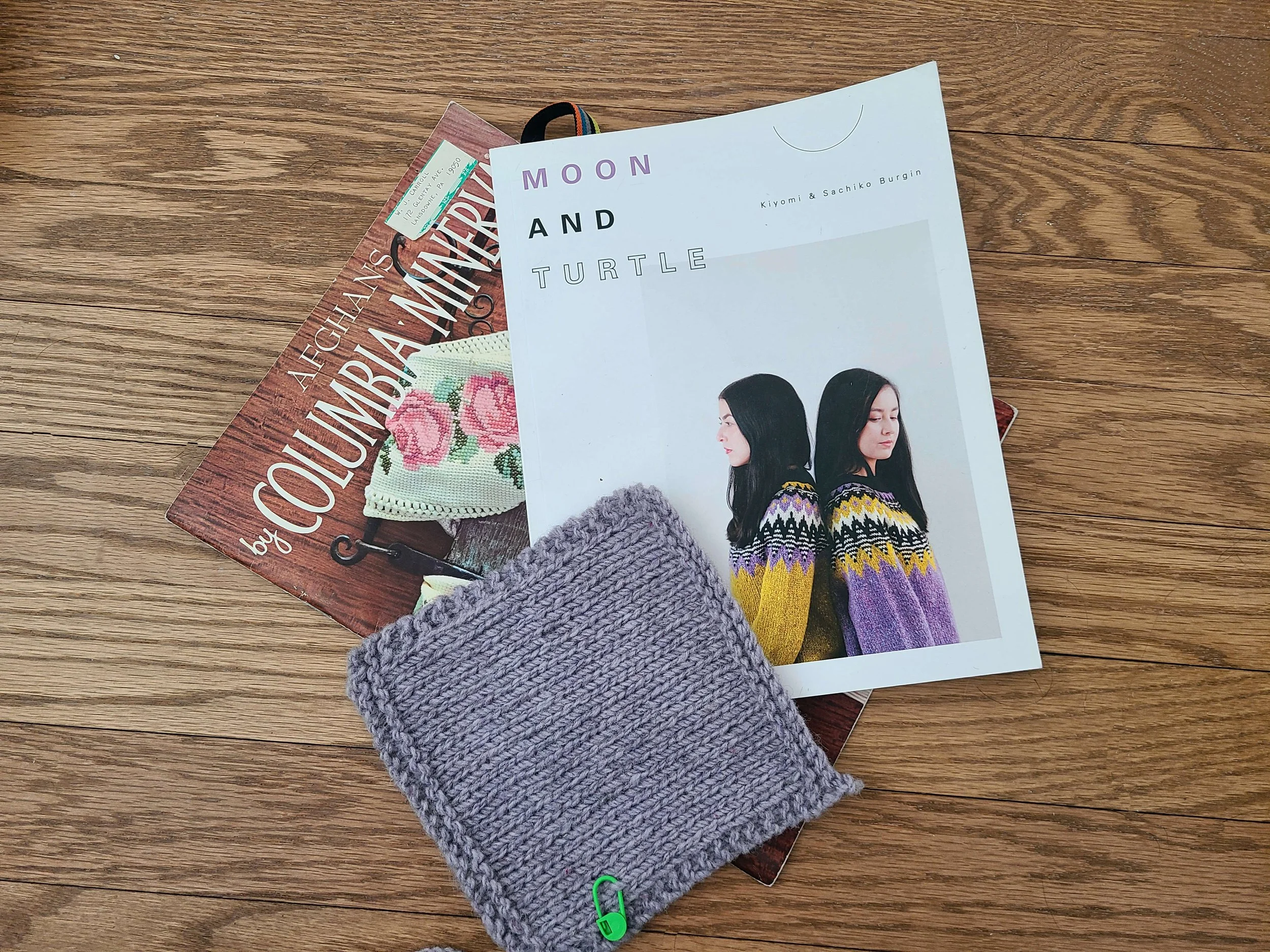
I’ve got a vintage afghan in progress and just swatched for a new cardigan from my Moon and Turtle book, so we’re underway!
I’m Whitney, a tech editor, graphic designer, and lifelong crafter. Join me for an exploration of my latest knitting, crochet, sewing, and upcycling projects, tips on knitting technique, editing tips for knitting designers, and more!