
Emergency Stitch Markers for Knit and Crochet
It’s happened to many of us: you’ve packed all the supplies for the project you’re currently knitting or crocheting so you can take it on a trip, or to your craft night, or just go craft in the park for a while. But then you get to a new step in your pattern and you realize you need a stitch marker that you don’t have.
Or, you think you have plenty of stitch markers on hand for a new project, only to discover you really need removable markers and you mostly have ring markers.
Luckily stitch markers are one of the easier things to make on the fly. Below are a few ideas for both ring style and removable stitch markers when you’re in a pinch.
If you’re not sure about the difference between ring and removable stitch markers, I discussed that in my last stitch marker post.
Spare Yarn
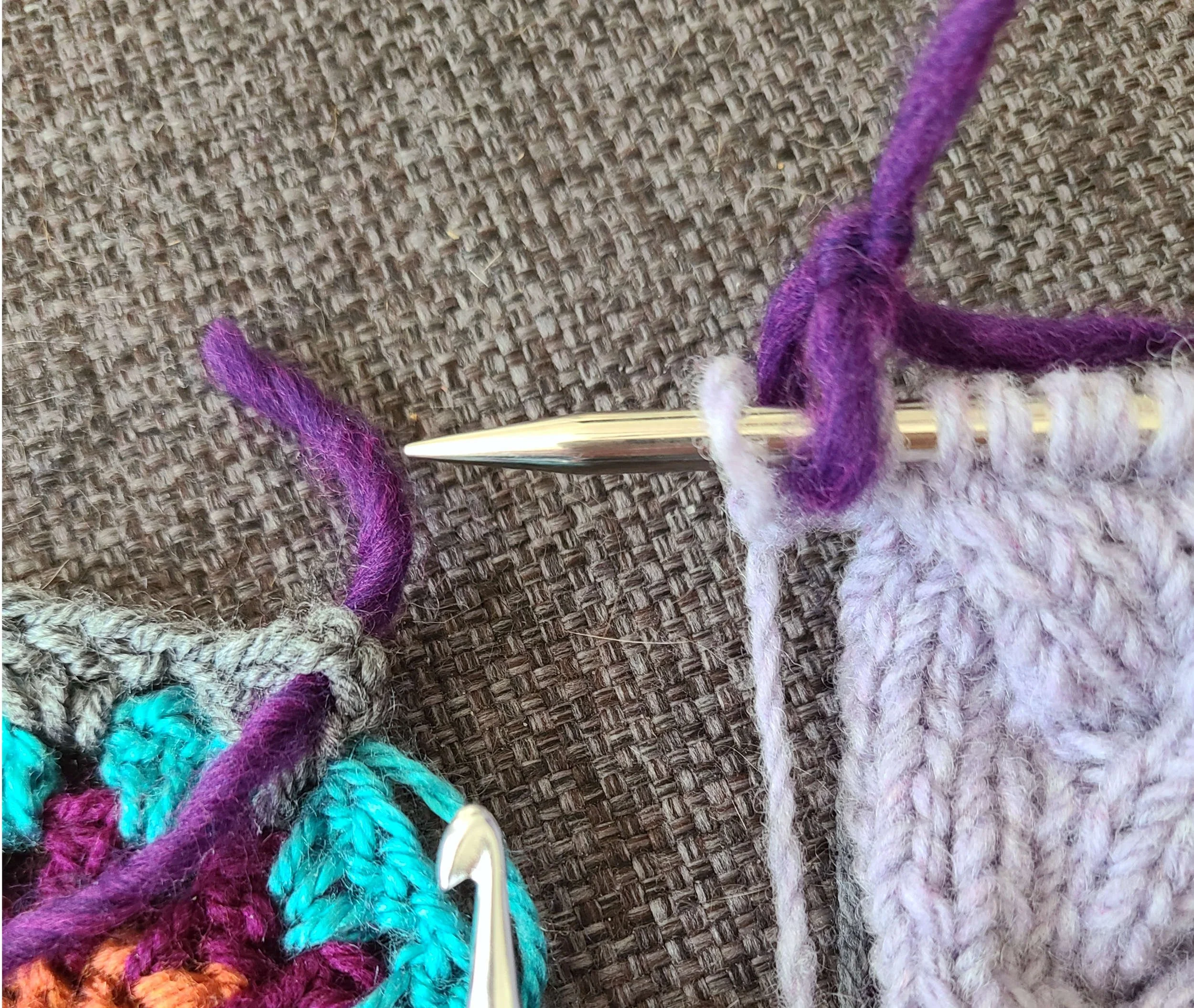
Example of contrast yarn serving as a removable (left) and ring (right) stitch marker.
Spare yarn in a contrast color to your working yarn is a particularly easy substitute. If you need a ring-style marker, simply tie the yarn in a small loop and use like a standard marker. This is also a great way to make markers if you’re working with a really big needle size (US 10/ 6mm or larger) and don’t have large enough ring markers on hand.
But you can also use spare yarn for crochet/removable type markers in a pinch! Just cut some short lengths of yarn and slide the ends through the stitch you need to mark without tying it off (you may need to use your crochet hook to help guide it through). This works best with wooly or “sticky” yarns – with plant fibers or acrylic the yarn might be too slippery and slide out of place.
Jewelry
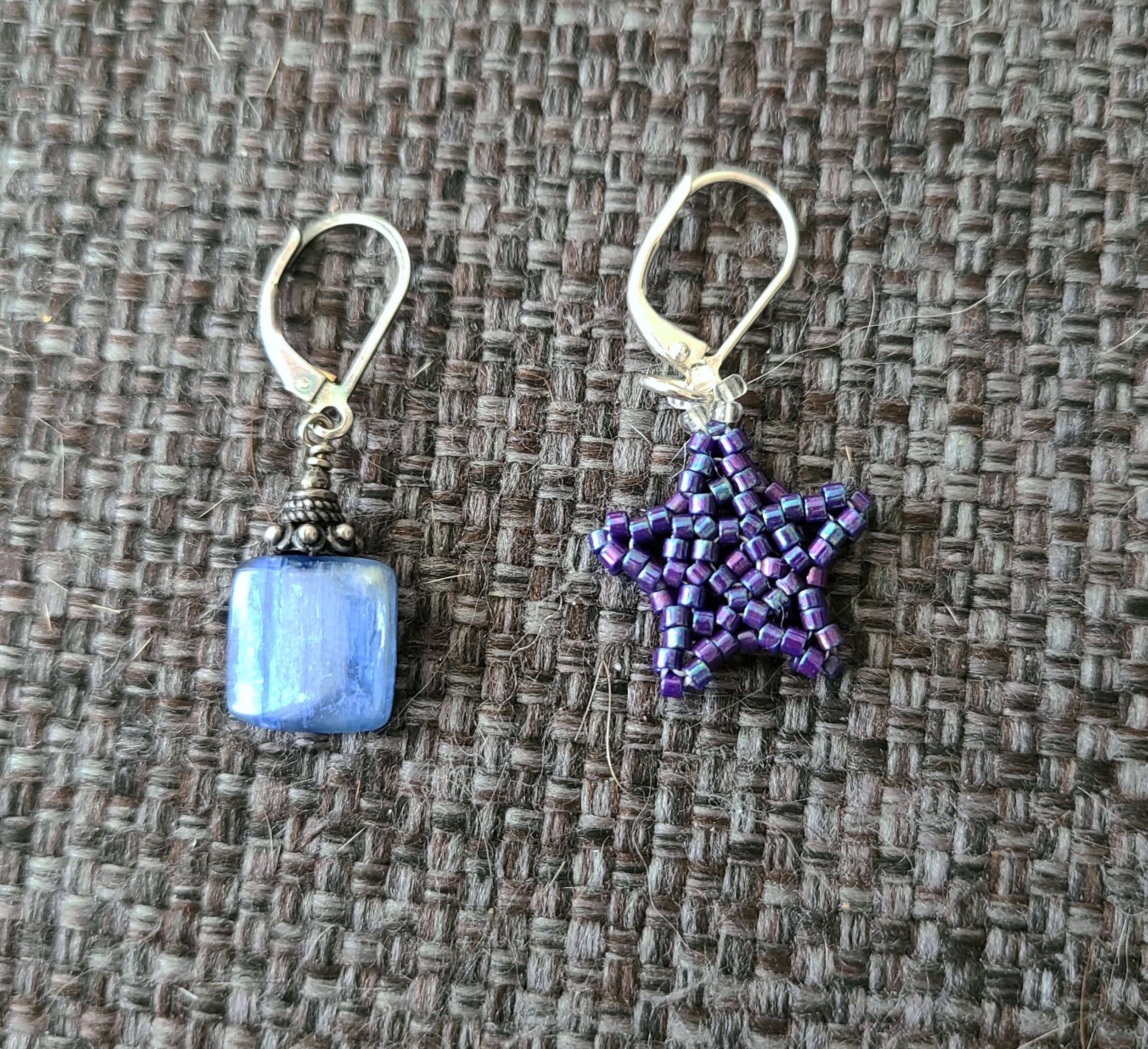
On the left, half of a pair of earrings. On the right, a beaded stitch marker from Chromatic Yarns.
Rings, obviously, can work as a ring style marker. Earrings, if they are the looped clasp kind of closure, make such good removable markers that some indy stitch marker makers use the same clasps. In a pinch you might even be able to use a bracelet or necklace with a C-shape hook clasp as a removable marker (although I’d only recommend this for very lightweight jewelry).
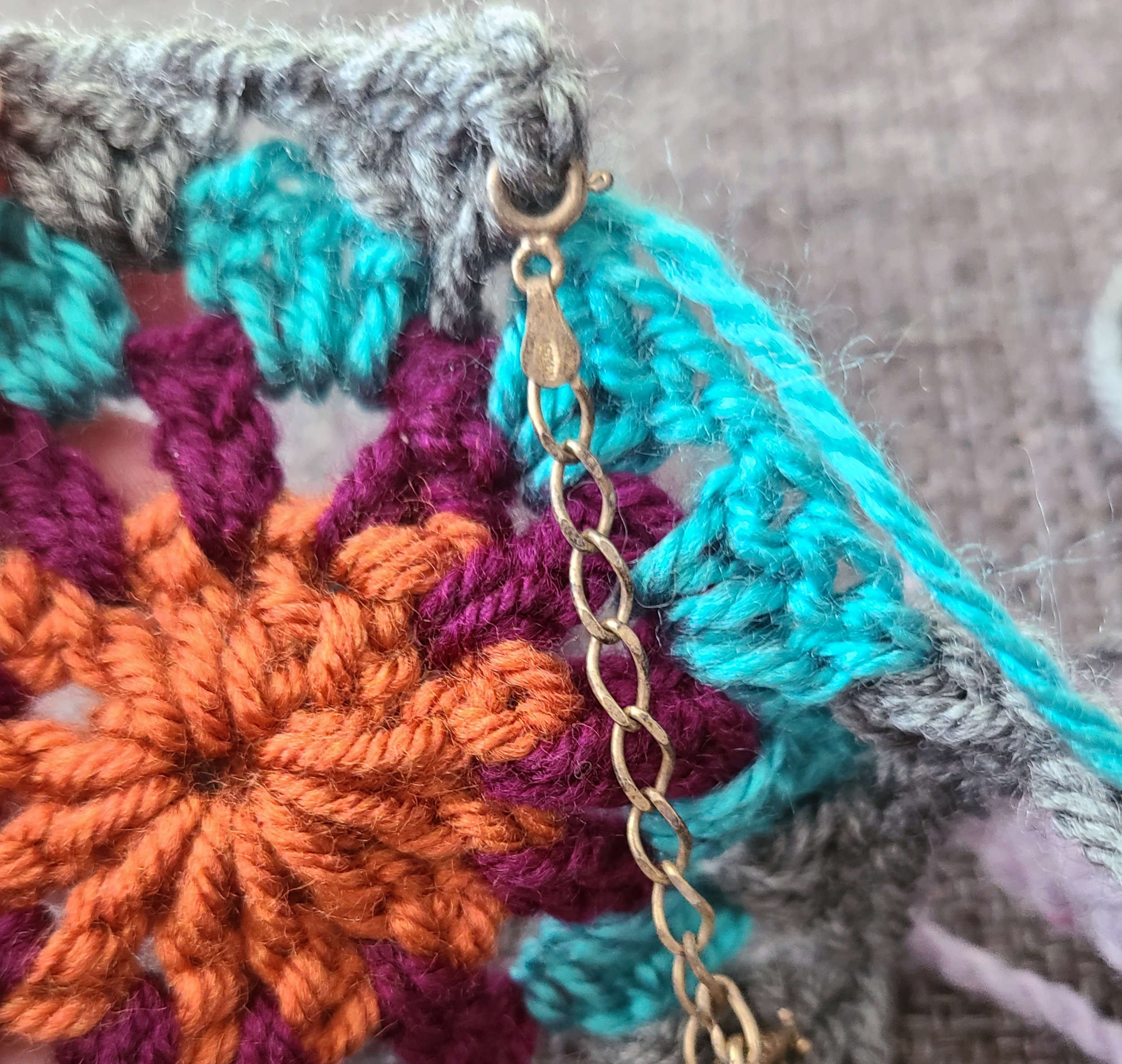
This c-clasp is attached to my junior high charm bracelet.
Of course, with jewelry you should probably only use items you can stand to lose, just in case it falls off! I used a very cheap ring as a stitch marker for years because it wasn’t something I wanted to wear as jewelry and yes, I eventually lost it.
Safety Pins (but only the coil-less kind)
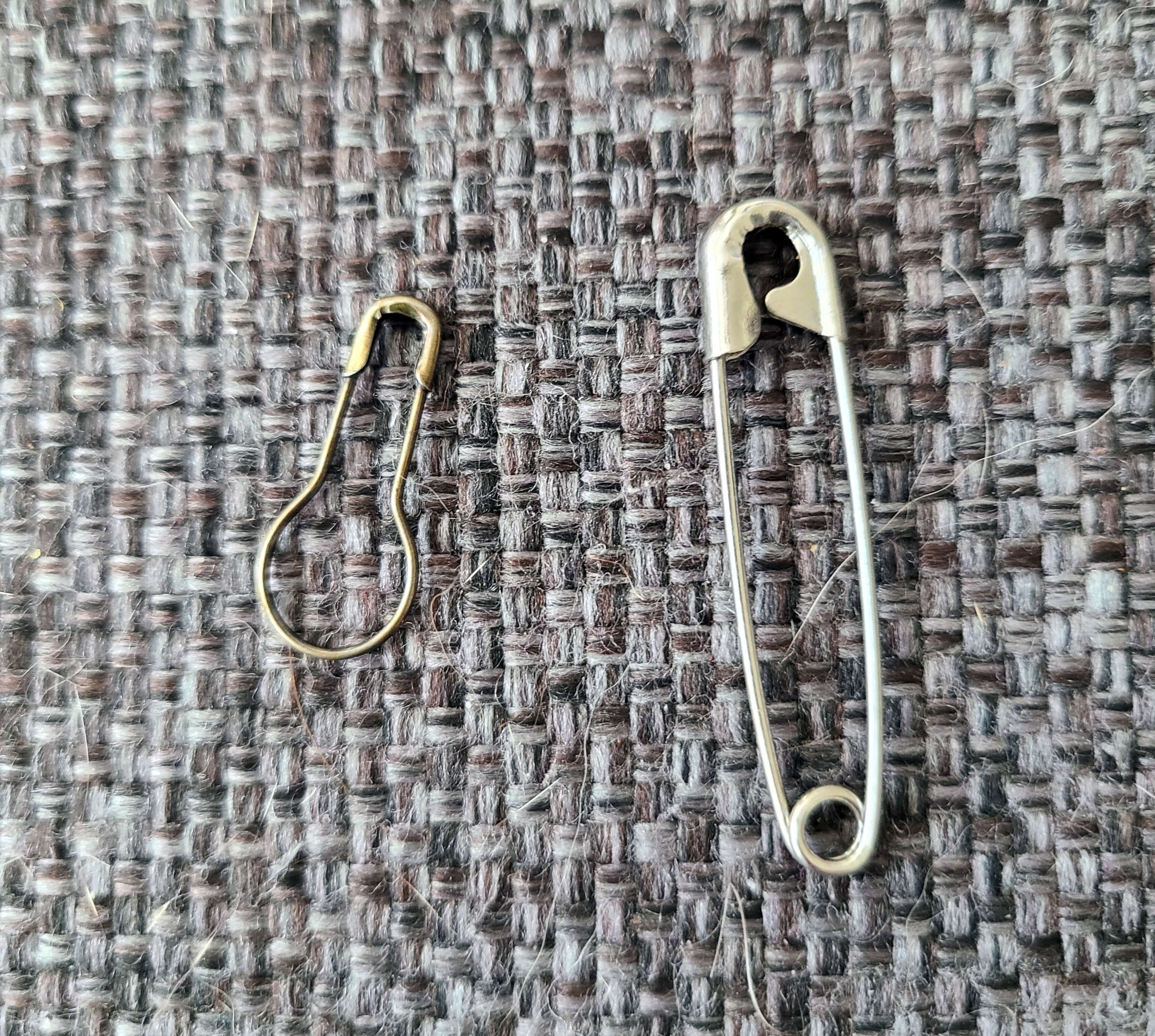
A coil-less safety pin on the left, a coiled pin on the right.
Safety pins are another commonly used fastener for stitch marker makers but there’s a catch – it has to be the “coil-less” type of safety pin, as the more common (at least in the US) coiled pins can easily get caught in your yarn.
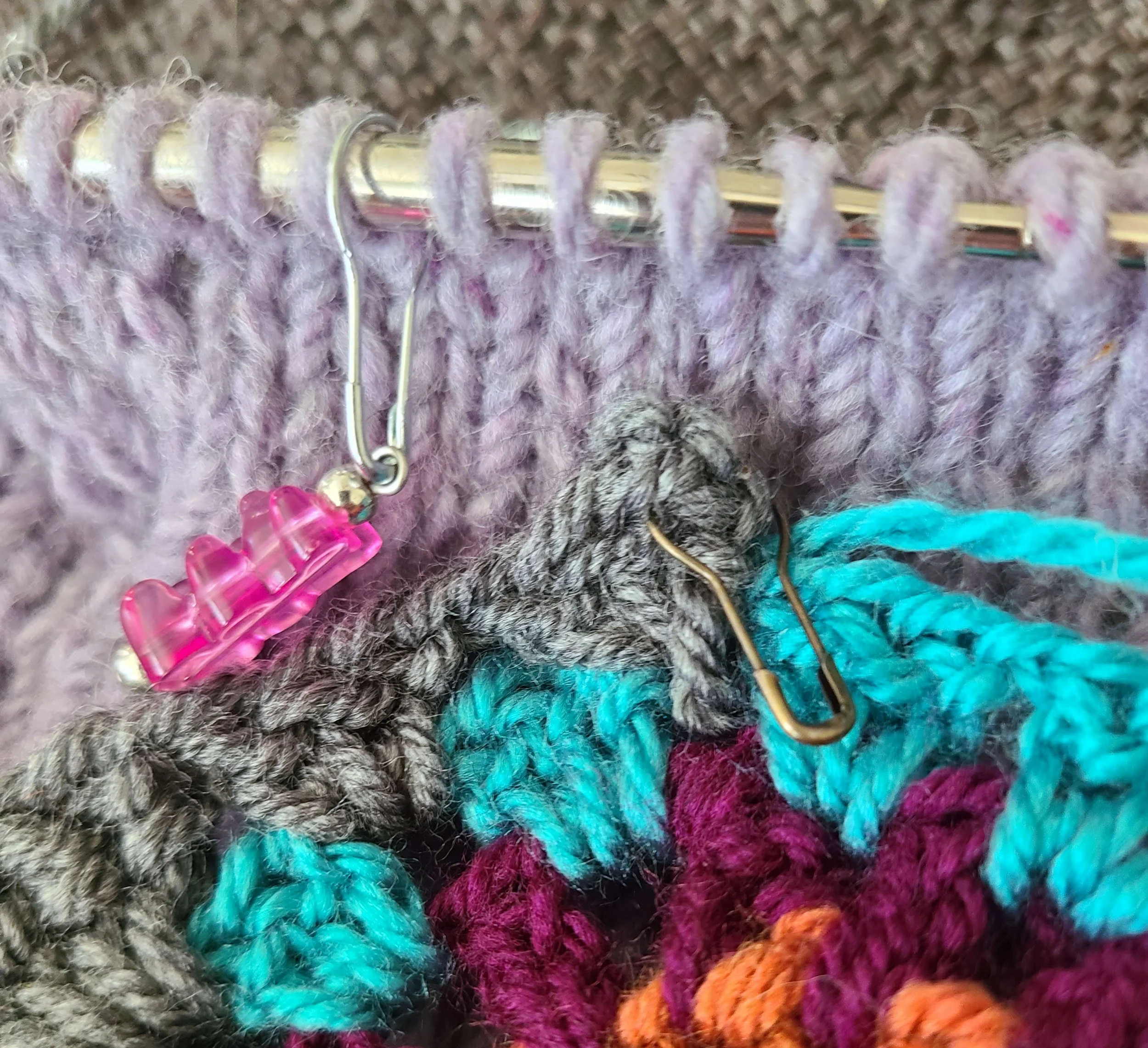
As you can see, only the (adorable) gummy bear bead distinguishes my Wild Sage Arts marker from the coil-less safety pin on my crochet project.
Rubberbands/Ponytail Holders
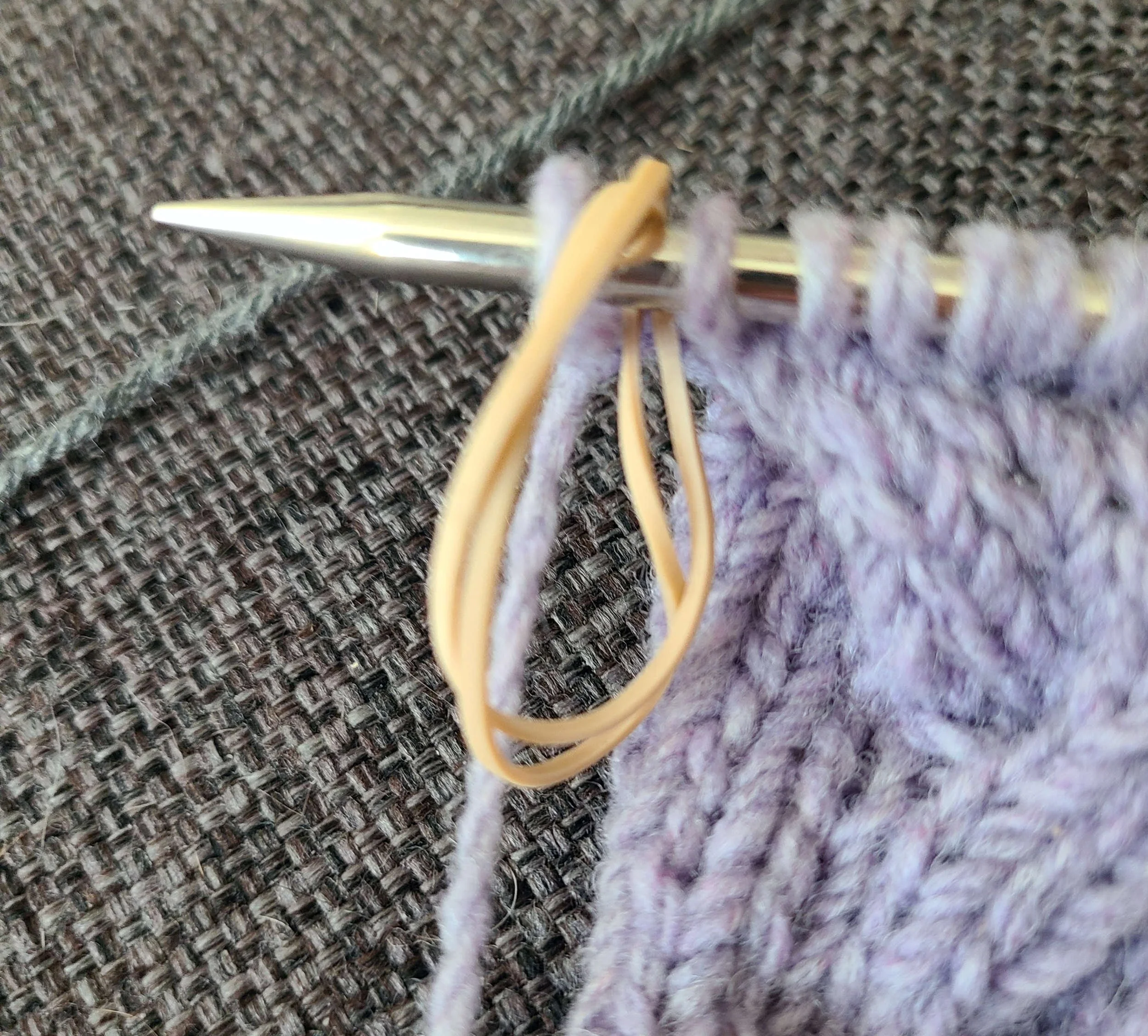
Rubberbands can work, but if they are too large they get a bit floppy.
Rubberbands or ponytail holders can be ring style markers in a pinch, however unless the circumference is very small before being stretched (such as a child’s size pony tail holder), these work best for projects with very large needles (in fact before I owned larger stitch markers I would use rubberbands anytime I was working with a size 13/ 9mm needle or larger). You can double them up to make them smaller but make sure they aren’t too tight on the needle to slide around easily.
Bobby pins
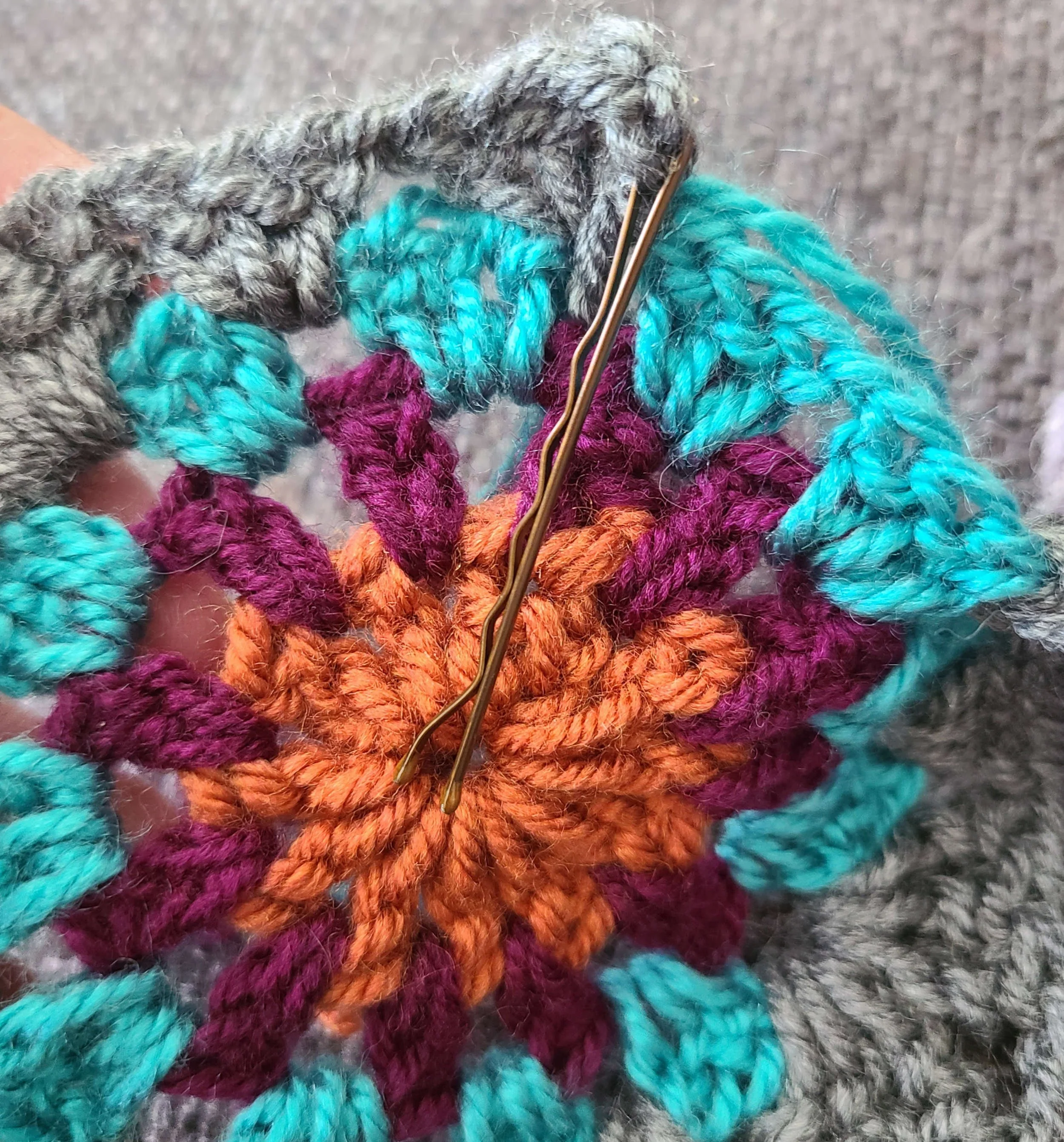
If you’re a bobby pin user like me, you know there’s almost always one in the bottom of every bag you own. Although best with lighter weight yarns (since they don’t have a large opening), these make great removable stitch markers – as long as you are just marking a stitch in the knitting and not trying to fit it over a knitting needle.
Binder clips
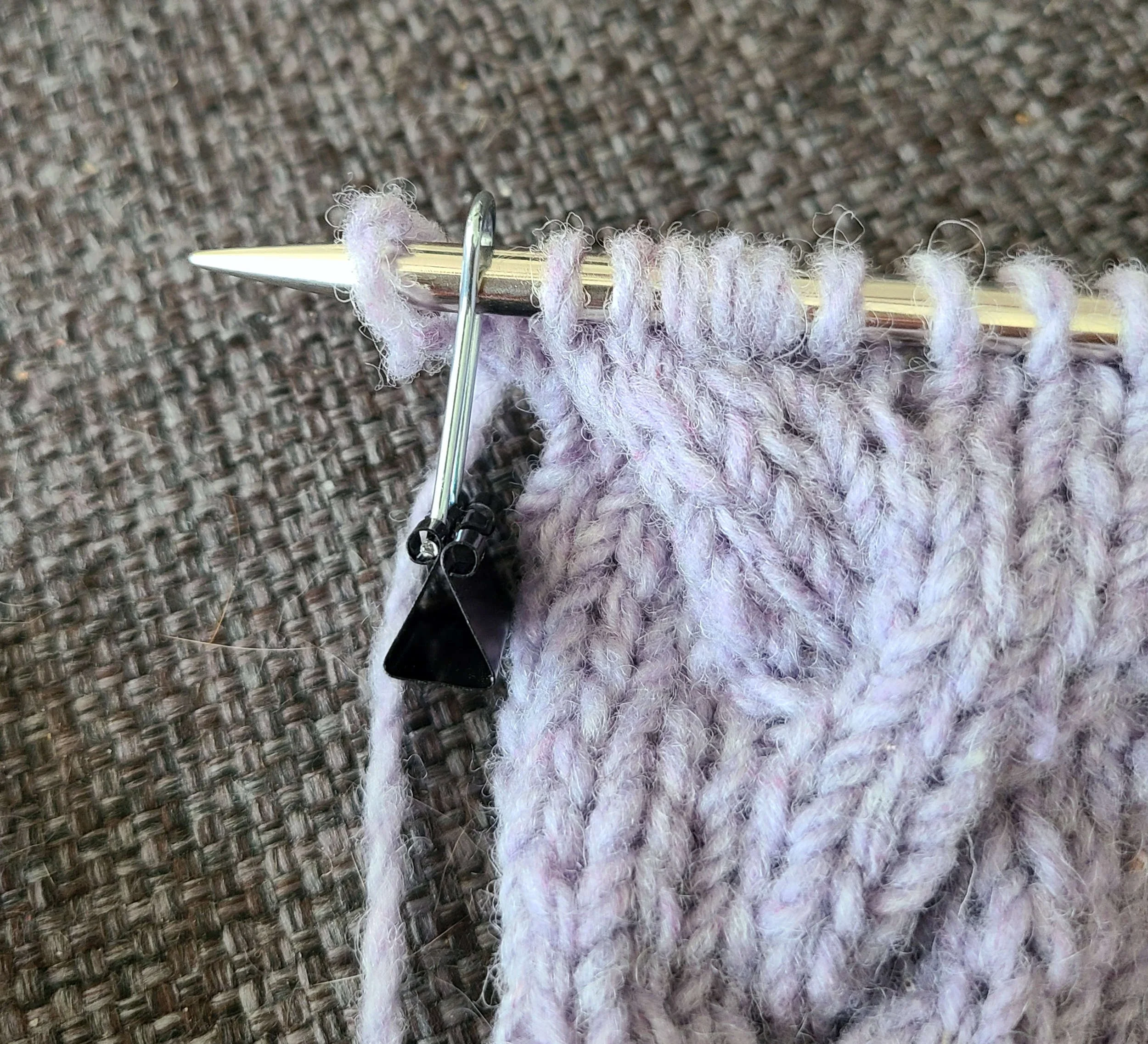
This binder clip doesn’t work as a binder clip any longer, but it can still be useful in a pinch!
Not recommended for really delicate or fuzzy yarns (the edge of the clip can snag), but binder clips can make decent ring markers – it’s also a good way to use binder clips where one of the metal brackets has broken off, as has the one in this photo.
Twist Ties
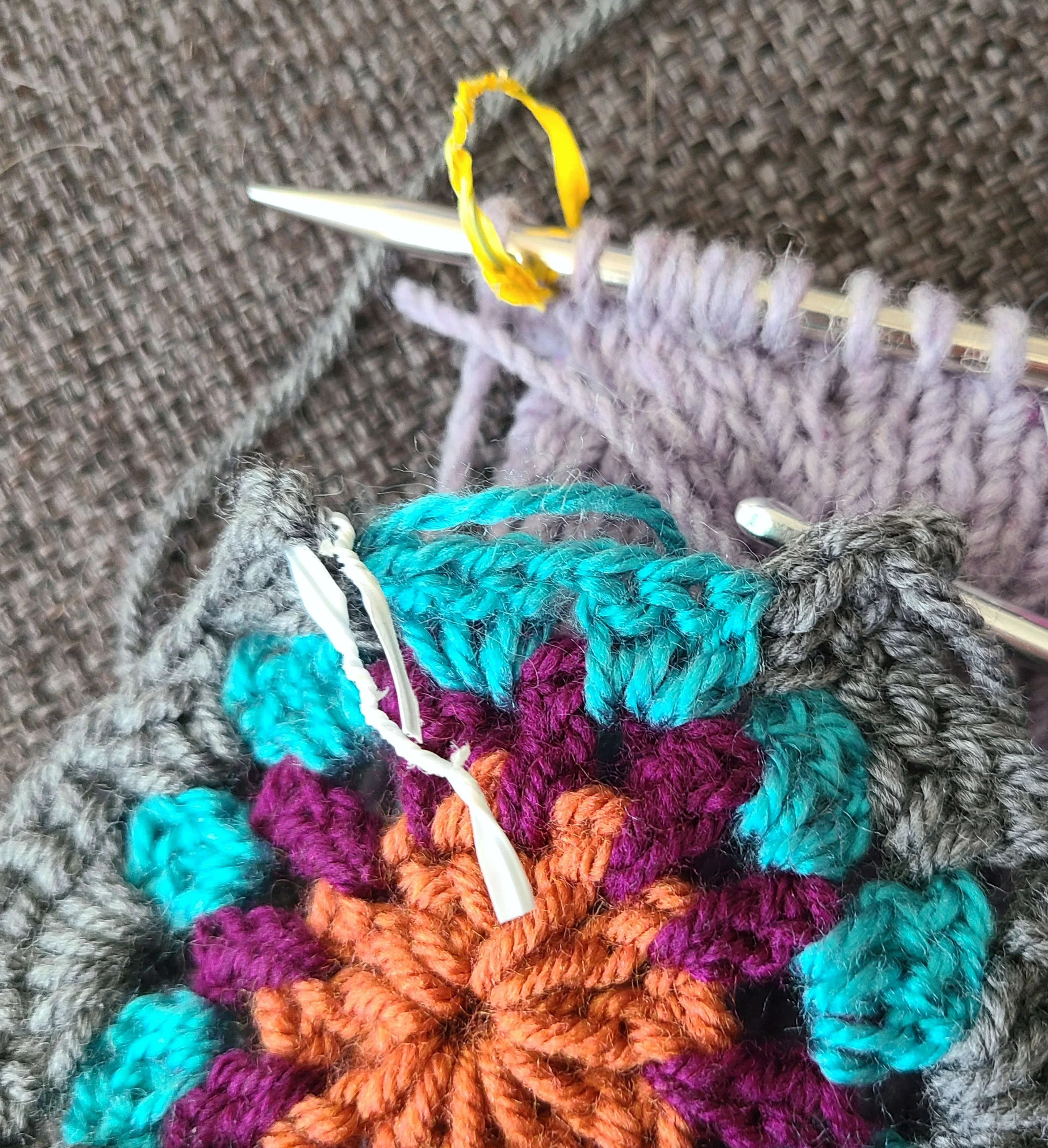
Similar to spare yarn, a twist tie can either be made into a ring shape, or threaded through a stitch as a removable marker.
This is another item I have used to make extra large stitch markers when working with large needle sizes. I will caution that twist ties don’t have a long shelf life as a stitch marker, as just moving it around on your project does seem to make it wear out fast. Plus if the paper has worn away on the ends, the wires can snag your yarn. But if you just need something for a few hours or days until you can get home and get a sturdier marker, this can work.
Have you used any of these for emergency markers? Have you used other items I didn’t suggest here? Let me know in the comments!
I’m Whitney, a tech editor, graphic designer, and lifelong crafter. Join me for an exploration of my latest knitting, crochet, sewing, and upcycling projects, tips on knitting technique, editing tips for knitting designers, and more!